
 Edited By:Mustafa Serdar Alperen
The Brief
Digital citizenship is already taught in Turkish middle schools. That was the problem.
Students can recite the rules. Don’t share your password. Don’t pile on. Check the source. They know the lecture, and it changes very little about what actually happens in a group chat at eleven at night. The Ministry didn’t need another explanation of the rules. It needed eleven-to-fourteen-year-olds to internalize something they’d already been told twice.
The governing principle was set before we started: the player should learn without noticing they’re learning. That sounds like a slogan until you try to design against it. It rules out most of the shortcuts – the quiz with a game skin, the reading passage between levels, the helpful character who stops the action to explain what you should have done.
Four subject areas had to be covered: cyberbullying, online privacy, media literacy, and healthy digital habits.
The Constraints That Shaped Everything
School computers. Not laptops bought this year. The machines that are actually in a Turkish middle school computer lab, running whatever browser the district installed, with teachers who have no rights to install software. This single fact decided the technology before any design conversation happened.
Two institutional reviewers. The game had to satisfy a national ministry on curriculum alignment and age-appropriateness, and a European funder on its own standards. Anything ambiguous gets caught by one or the other, usually late.
Bilingual from the first sprint. Turkish and English, built in parallel rather than translated afterwards. That decision reaches into UI layout, dialogue box sizing, and how much room a line of text is allowed to take.
Three Days in a Room With Teachers, Before Any Code
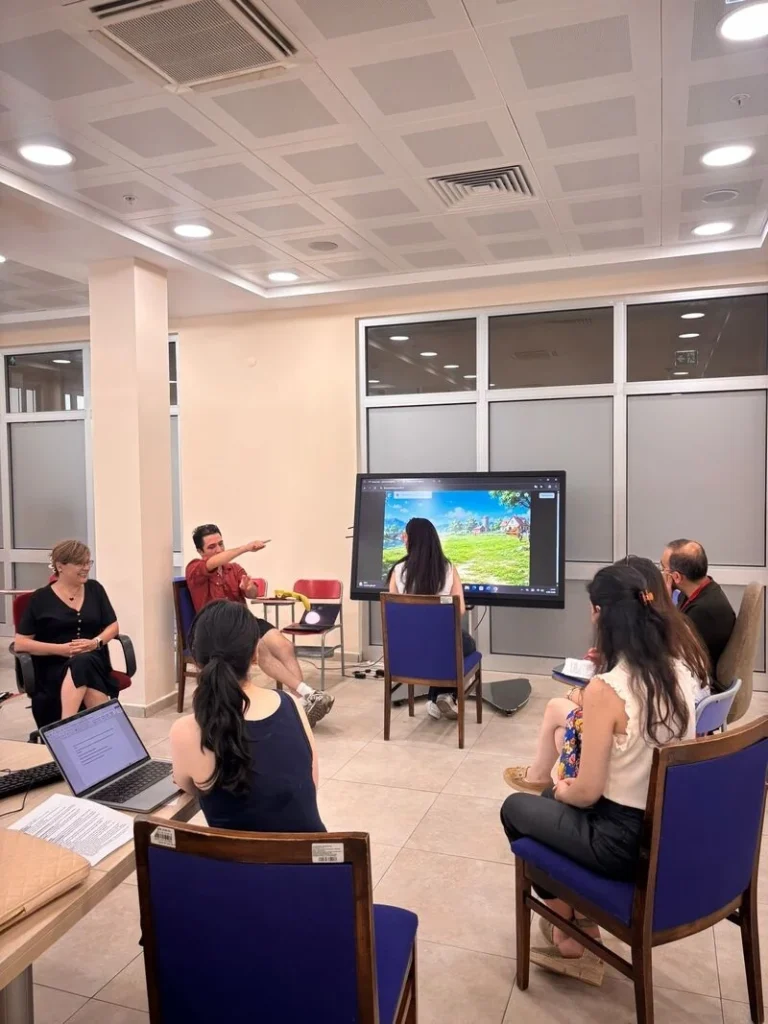
The project opened with a three-day workshop with teachers and pedagogues. No art style, no mechanics, no engine discussion. The output was a fixed set of learning outcomes.
Pedagogy first, technology second: and the order is the whole point. Design the game first and add learning outcomes later, and you get a game that gestures vaguely at a subject. Fix the outcomes first and every mechanic has a job to do. Each mission in the finished game traces back to something a teacher in that room said students weren’t getting.
This is also the part most educational game projects skip, and it’s why so many of them end up as quizzes with better graphics. GDD guide.
DijiVat, and a City That Heals When You Get It Right
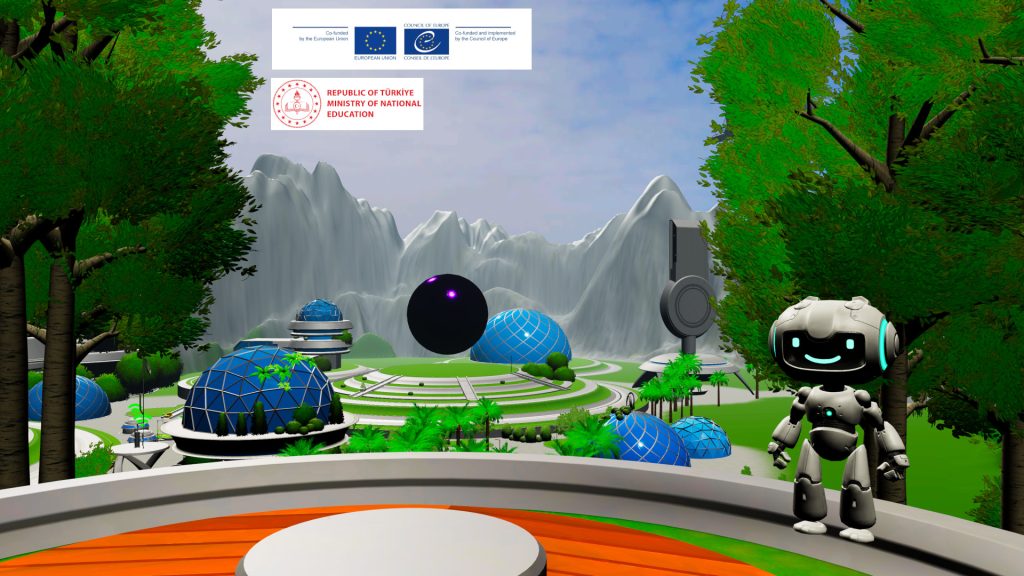
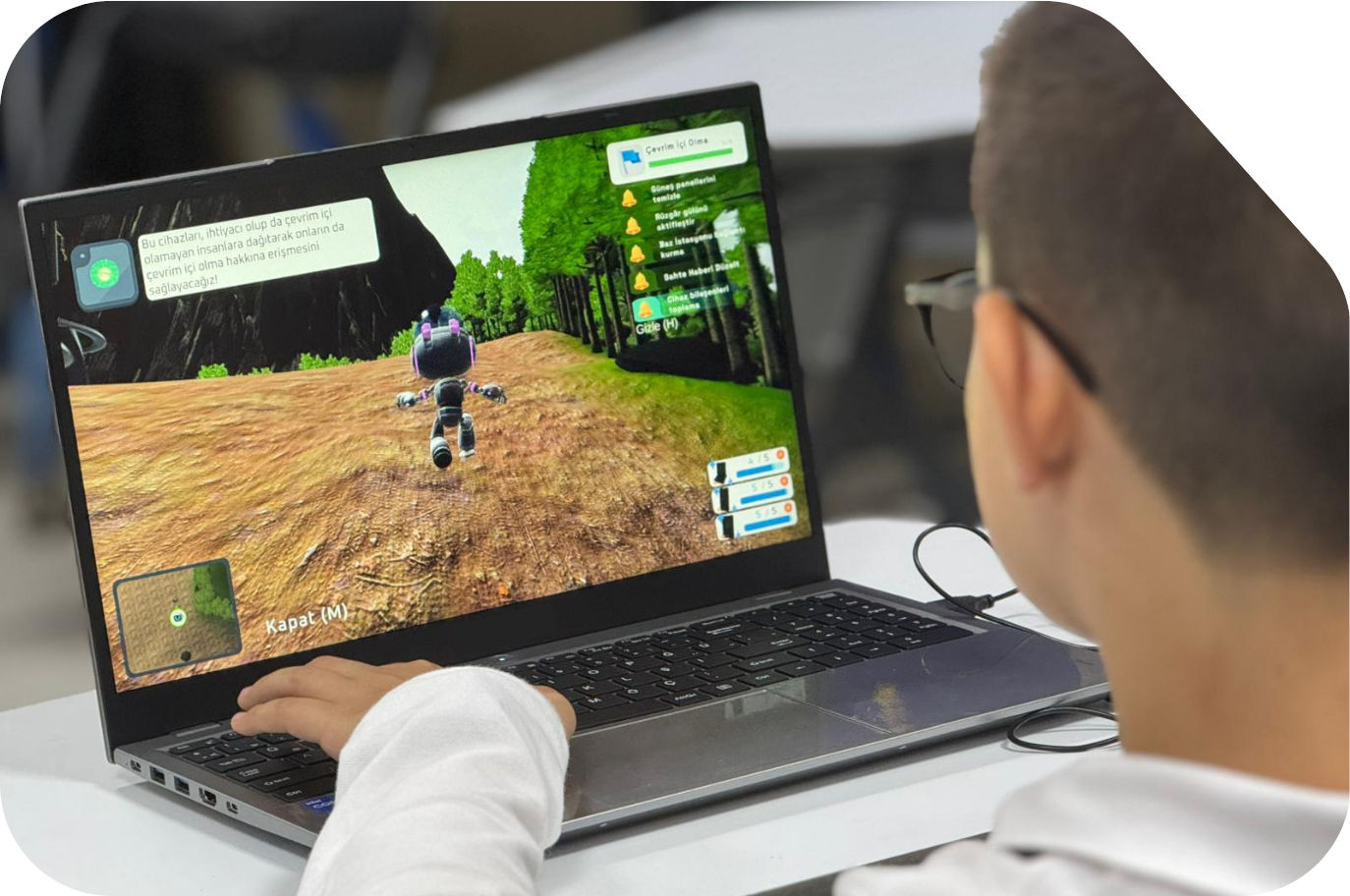
The player is DijiVat, a robot working through missions in a digital city that’s in poor condition.
Make good decisions and the city visibly repairs itself. Make bad ones and it stays broken. That’s the pedagogical mechanism in one mechanic: consequence, made visible, immediately, with nobody narrating it. A twelve-year-old who scrolls past a bullying incident sees a street that doesn’t get fixed. No one has to explain what happened, which is precisely why it lands.
Systems Under the Hood
- Quest system – missions map one-to-one onto the learning outcomes agreed in the workshop
- NPC and dialogue system – the situations play out as conversations, because conversation is where the behavior actually lives
- Quiz mechanics – the checkable layer, for teachers who need to see what a student absorbed and for reviewers who need evidence
- Score, badges and rewards – progression, so there’s a reason to reach the end
- Cinematics and storytelling – the frame that holds the missions together as one story rather than five exercises
Built in Unity and exported to WebGL. You can check our Unity game development services here.
Why It Runs in a Browser
One URL. No install, no launcher, no update cycle, nothing for a district IT department to approve.
A teacher opens a link and the class plays. On a nationally distributed education title, the delivery decision carries as much weight as the design decisions – a beautifully built game that can’t get onto school hardware teaches nobody anything. WebGL was the answer, and it’s since become one of the things we’re known for.
Where It Stands
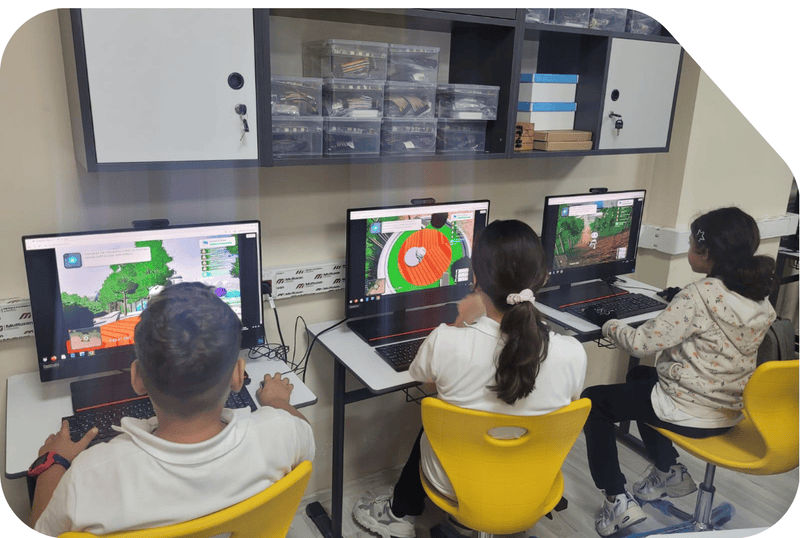
Shipped in Turkish and English, playable from a browser on school computers, delivered under Ministry authorization with Council of Europe funding. Played by the students under the teachers observation. It’s shipped on EBA platform, which serves 5M+ middle
school students. You can check it out from the image below:

What We’d Bring to Your Project
- Fix the learning outcomes before the mechanics. Everything downstream gets easier and cheaper.
- Choose the delivery platform before the art style. Where it has to run constrains what you can build, and finding that out in month five is expensive.
- Make consequence visible instead of narrated. It’s the difference between a game that teaches and a game that lectures.
- Design for institutional review from day one. Ministries, universities and funders all have review processes. Building to them from the start costs a fraction of retrofitting to them at the end.
- The same approach applies outside the classroom – see how we use gamified learning for corporate training and campaigns.
Work With Us
We’ve built educational games for a national ministry, rehabilitation games with a university hospital department, and simulations for classrooms. If you’re commissioning something in this space – a ministry programme, a university project, an EdTech title, corporate training – send us the learning outcomes and we’ll tell you honestly whether a game is the right delivery format.
Scope, team and a fixed quote come back within two business days.

Got a Game That Needs to Ship?
Send a design doc, a build, or three sentences and a reference game. We’ll come back with scope, team and a number.