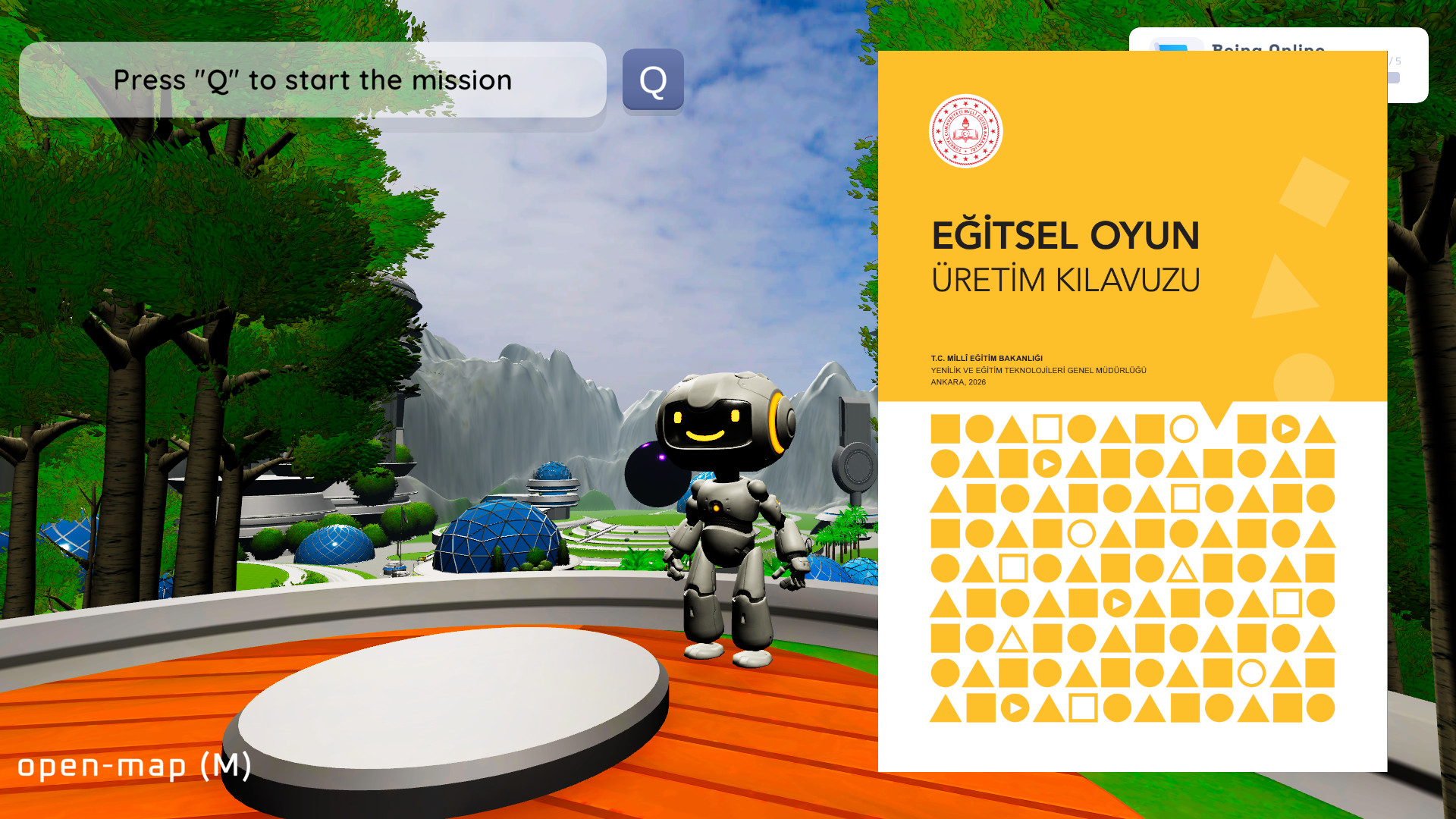
Turkey’s Ministry of National Education, through its innovation arm YEGİTEK (Directorate General of Innovation and Educational Technologies), quietly published something significant last month: an “Educational Game Preparation Guide.” It covers a wide range, pedagogical foundations, QA processes, interface design, accessibility criteria and you can access it on their official page (Turkish).
When we saw the announcement, something in us immediately said “wish this had existed earlier.” Because we at ZeroHint have already been through it. We developed educational games for the Ministry of National Education. Without a guide, without clear standards, in a mode where you’d often only understand what was expected once you were sitting in the meeting.
What’s actually in the guide?
Reading through it, the honest answer is: it’s thorough. The focus isn’t just “how to make a game” but “how to make a game for learning purposes” and that distinction is much bigger than it sounds.
Game type selection, the relationship between learning objectives and mechanics, interface decisions by age group, narration standards, quick checklists… All of this, in one place, aligned with the Ministry’s ecosystem. Until now, nothing like this existed in Turkish for this specific context. The guide targets teachers, software teams, and educational content developers all at once which makes it broad but also genuinely practical.
What we went through
Building educational games for a ministry is its own thing. As an institutional client, the Ministry had very clear expectations on some fronts and almost no clarity on others. You’d discover which was which somewhere in the middle of the project.
Here’s one thing we learned the hard way: if you start game design before the learning objectives are locked in, you’ll end up rewriting either the mechanics or the content later. Both are frustrating, but the second one is expensive. Which information a student needs to internalize, and at what level; that’s a curriculum question, not a design question. If you can’t settle it upfront, the project drags.
QA was another thing entirely. In standard software projects, quality assurance means finding technical bugs. In educational content, there’s a second layer: does the game actually teach anything? The question isn’t just “does it work?” but “does it work for learning?” If you don’t have a framework for testing that, you can end up doing a root-level revision on a product you thought was finished. We did 😀
Criteria ambiguity is its own chapter. Accessibility standards, visual language, audio design when none of this is written down at the start, these become topics you renegotiate at every meeting. YEGİTEK putting a framework around all of this will make the process far more predictable, both for development teams and for the Ministry itself.
What does this mean for the field?
Most teams working in this space in Turkey have either built their own methodology through trial and error, or looked abroad for references. A Turkish-language, public, Ministry-aligned standards document simply didn’t exist before.
That matters because companies wanting to produce content for the Ministry now have a way to understand the expectations before they’re already deep in a project. For smaller teams especially, this is significant: They feel the cost of trial and error much more sharply.
A guide alone won’t fix everything, of course. How it gets interpreted in practice, how it filters into procurement processes, those are separate questions. But as a starting point, it’s worth acknowledging.
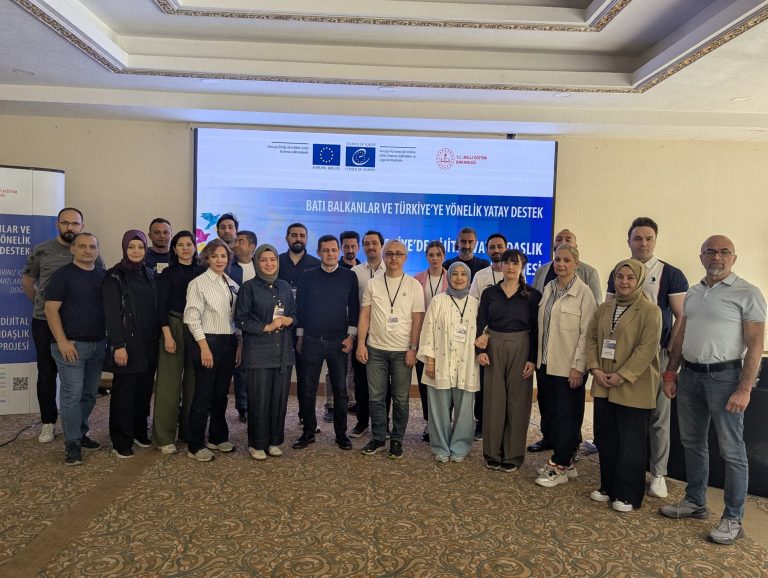
You can review our project, which we developed for the Ministry of National Education and published on the eba platform, and which is supported by the Council of Europe, here.
We at ZeroHint continue working on both the technical and pedagogical sides of this space. Outside the Ministry’s ecosystem, the same principles drive our gamified learning work. If you’re a team looking for experience in educational game development or Ministry of Education projects, we’re here to talk.
ZeroHint is a Turkey-based team working in educational technology and software development. We provide educational content and software development services for public institutions, including Ministry of National Education projects as well as private sector clients.